
Why A Roof Inspection In Arizona Matters After Every Storm
Monsoon winds, sudden hail, and fast-moving rain cells hit Arizona hard. Even a “minor” storm can loosen flashing, bruise shingles, crack tiles, or open tiny gaps that later turn into rain leakage damage. You may not see problems from the ground; however, water can travel far before it shows up on a ceiling. That’s why a timely roof inspection in Arizona protects your home, your warranty, and your insurance claim. It also gives you a clear plan—repair now or prepare for a replacement.
Storm damage basics: Hail, Wind, and Rain Leaks
Hail Impact (What It Looks Like)
Hail doesn’t always shatter tiles or puncture shingles outright. In Arizona’s heat, hailstones often bruise asphalt shingles, exposing or fracturing the mat. On tile roofs, hail can micro-fracture tiles or chip edges. You may not notice these spots until the next rain drives water under the surface. Left alone, bruised or cracked areas accelerate UV damage and shorten the roof’s life.
Wind Lift and Edge Failures
High winds don’t have to rip off whole sections to cause trouble. They can lift shingle tabs, break their adhesive bond, or loosen ridge caps and edge metal. On tile roofs, gusts can shift tiles out of position and expose the underlayment. Once wind lifts a seam, dust and rain work their way underneath, starting slow leaks that show up months later.
Rain Leakage Damage (Often The First Sign You Notice)
Rain reveals weaknesses. Look for stains, bubbling paint, musty odors, or warped baseboards. You might find damp spots around skylights, chimneys, or parapet walls. On flat or low-slope roofs, rain can pool; ponding water stresses seams and coatings and forces moisture into tiny openings. If you see interior signs, act now—water rarely fixes itself.
Quick homeowner checklist right after a storm
Before you call a pro, take a careful look from the ground. Stay safe and avoid climbing.
- Walk the property and photograph anything new: scattered granules, broken tiles, fallen branches, loose metal, or shingle pieces.
- Check ceilings and upper walls for fresh stains or damp patches.
- Look at gutters, scuppers, and downspouts for granules or tile shards.
- Review attic areas (if safely accessible) for damp insulation or daylight at penetrations.
- Note dates and times of the storm; this helps later with insurance.
If you spot anything suspicious, schedule a roof inspection in Arizona within 24–72 hours, while evidence remains fresh and before another storm rolls through.
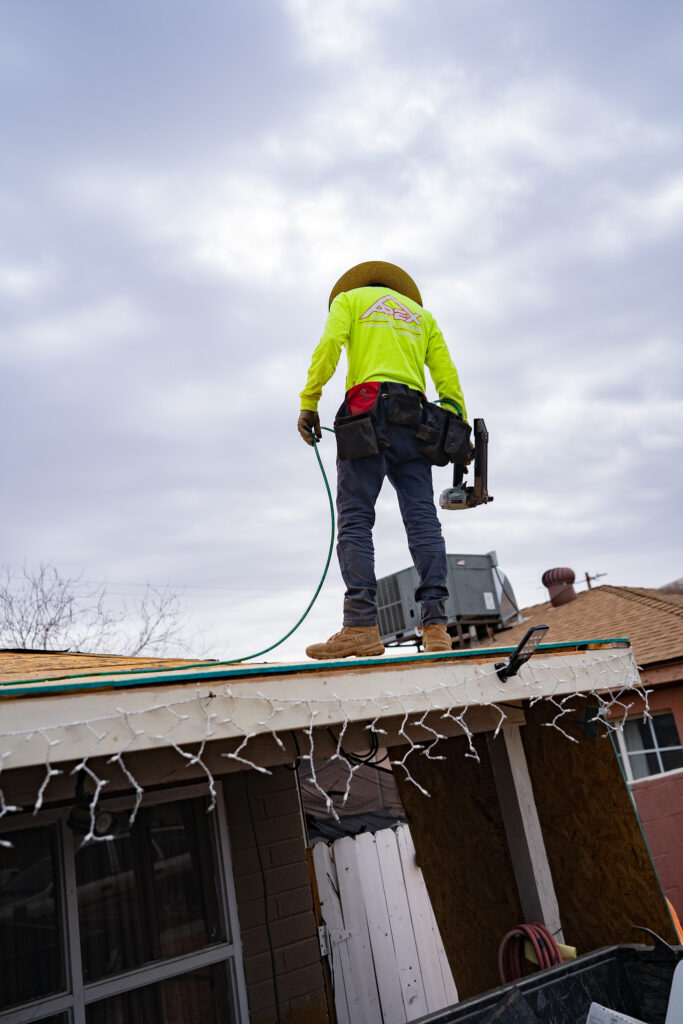
What We Check During A Professional Roof Inspection In Arizona
The Big Picture
A licensed inspector starts with the roof’s age, material, slope, and drainage. Next, they review storm direction to find likely impact zones.
High-Value Targets
We focus on components that fail first in Arizona’s climate:
- Underlayment on tile roofs for cracks, UV wear, or nail penetrations.
- Shingle adhesion and hail bruising (soft spots, exposed fiberglass).
- Flashing at chimneys, skylights, pipes, and walls for lift or gaps.
- Edge metal and ridge caps for wind displacement.
- Flat roof coatings for blisters, seam splits, and ponding patterns.
- Parapets and scuppers for cracks, clogged drains, and deteriorated sealant.
Finally, we document everything with photos, mark hail strikes, and map wind paths. You receive a written report with clear next steps.
How Insurance Views Hail, Wind, and Rain Leakage Damage
Insurers expect proof. Therefore, a detailed roof inspection in Arizona—with dates, photos, and measurements—supports your claim. Hail and wind often count as sudden, covered events, while long-term wear may not. If rain leaks followed a covered event, your report should connect the sequence: storm → material impact → water entry. This timeline matters. It helps adjusters distinguish fresh storm damage from old deterioration and protects your rights.
Repair vs. Replace: How To Decide (Without Guessing)
When A Repair Makes Sense
If damage is isolated—say, a few lifted shingles, one cracked tile run, or a small flashing gap—targeted repairs can restore performance. We reseal, resecure, or replace materials and confirm the area stays dry with a moisture check.
When Replacement Saves Money Over Time
If underlayment has failed across broad areas, shingles show widespread hail bruising, or flat-roof seams and coatings have aged out, a sectional or full replacement protects your home and improves efficiency. We compare costs per year of service life so you can see the long-term value—not just today’s bill.
Special notes for Arizona roof types
Tile Roofs (Concrete Or Clay)
Tiles often survive; underlayment does not. Heat cycles, hail pecks, and wind shifts open paths that only appear during heavy rain. A thorough inspection peels back select tiles to examine the underlayment and test for soft spots or UV brittleness.
Asphalt Shingle Roofs
Hail bruises, granule loss, and lifted tabs are the big three. We test adhesion, probe soft spots, and check starter courses and ridges where wind attacks first.
Flat and Low-Slope Roofs (Foam, TPO, Modified Bitumen)
Ponding water, seam splits, and degraded coatings cause most leaks. We map ponding areas, inspect scuppers and drains, and evaluate whether a recoat or localized membrane repair will restore performance.
Prevent the next leak: simple steps that pay off
- Trim overhanging branches to reduce impact and debris.
- Clean gutters and scuppers before monsoon season so water can exit fast.
- Secure edge metal and flashing at least once a year.
- Schedule a roof inspection in Arizona every 12 months—or after any hail, high wind, or heavy rain.
Small habits extend roof life and reduce surprise repairs.
FAQs: Fast Answers For Arizona Homeowners
How soon should I schedule an inspection after a storm?
Within 24-72 hours. Early documentation strengthens your claim and prevents small issues from turning into major leaks.
Can I wait until I see a stain?
You can, but we don’t recommend it. Water can travel through layers and show up weeks later. Early checks catch problems when repairs cost less.
Will an inspection damage my roof?
No. We use non-invasive methods first. When needed, we lift limited tiles or check seams carefully to confirm the condition below.
Your Next Step
If hail, wind, or heavy rain just hit your neighborhood in Phoenix, Scottsdale, Tempe, Mesa, Chandler, Gilbert, Glendale, Peoria, Surprise, Avondale, or Goodyear, don’t wait for stains or leakage to occur. Book a professional roof inspection in Arizona with Apex Roofing Systems and get a clear, written plan to stop leaks, protect your claim, and extend your roof’s life.
Not only do we have wide experience in residential roofing, but we can inspect, fix, or repair multifamily and commercial roofing!
Call Apex Roof Systems to schedule your inspection today. We respond quickly, document thoroughly, and repair the right way–the first time.
Keep up with us on social media: