
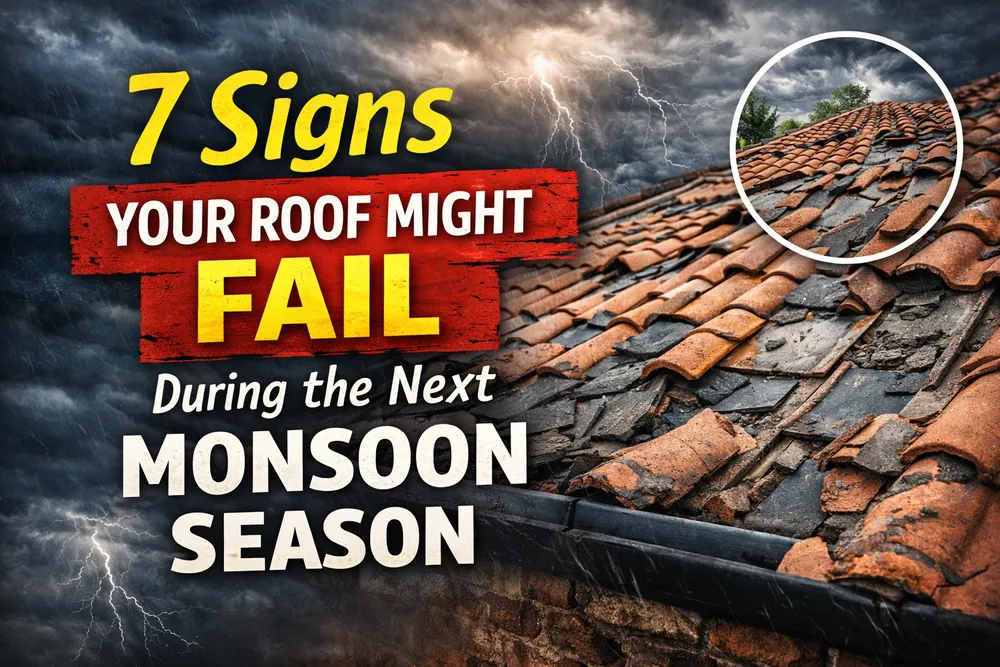
Arizona monsoon storms can arrive quickly — and when they do, they bring strong winds, heavy rain, and flying debris.
For many homeowners, the first sign of a roofing problem appears after the storm, when water starts leaking inside the house.
But here’s the truth most people don’t realize:
Your roof usually gives warning signs before it fails.
If you know what to look for, you can often catch problems early and prevent expensive damage.
Here are seven signs your roof may be vulnerable before the next monsoon arrives.
1. Cracked or Broken Roof Tiles
Tile roofs are common throughout Arizona, but they are not immune to damage.
Cracked or broken tiles allow water to reach the underlayment beneath the roof. Once that protective layer becomes exposed, leaks can develop quickly during heavy rain.
2. Loose or Missing Roofing Materials
Strong desert winds can gradually loosen roofing materials over time.
Missing tiles, lifted shingles, or damaged flashing can create entry points for water during storms.
Even small gaps can lead to major leaks once rain begins to accumulate.
3. Worn or Aging Underlayment
Underlayment acts as the waterproof barrier beneath your roof tiles.
In Arizona’s extreme heat, underlayment can deteriorate over time. When this layer weakens, your roof becomes much more vulnerable during monsoon storms.
4. Water Stains on Ceilings or Walls
If you notice discoloration or stains inside your home, your roof may already be allowing moisture in.
These signs often appear before major leaks develop and should be inspected right away.
5. Debris Accumulation on the Roof
Leaves, dirt, and debris can trap water on your roof’s surface.
During a monsoon storm, this buildup can block drainage paths and increase the risk of water intrusion.
6. Damaged Flashing Around Roof Features
Flashing seals areas around chimneys, vents, skylights, and roof penetrations.
If flashing becomes loose, cracked, or corroded, these areas can quickly become leak points during heavy rainfall.
7. Your Roof Is More Than 15–20 Years Old
Age alone doesn’t always mean your roof will fail — but older roofs are more vulnerable to storm damage.
Over time, materials weaken and protective layers break down.
If your roof is approaching this age range, a professional inspection can help identify potential risks before monsoon season arrives.
The Best Time to Inspect Your Roof Is Before the Storm
Once a monsoon storm hits, roof damage can escalate quickly.
The smartest move is to inspect your roof before the storm season begins.
A professional inspection can identify weak spots, damaged materials, and early warning signs that most homeowners would never notice from the ground.
Protect Your Home Before the Next Monsoon
Your roof is your home’s first line of defense against Arizona’s intense weather.
Catching small issues early can prevent costly repairs later.
At Apex Roofing Systems, our experienced team helps homeowners across Arizona identify roofing problems before they become emergencies.
Schedule a free roof inspection with Apex Roofing Systems and make sure your roof is ready for the next monsoon season.