
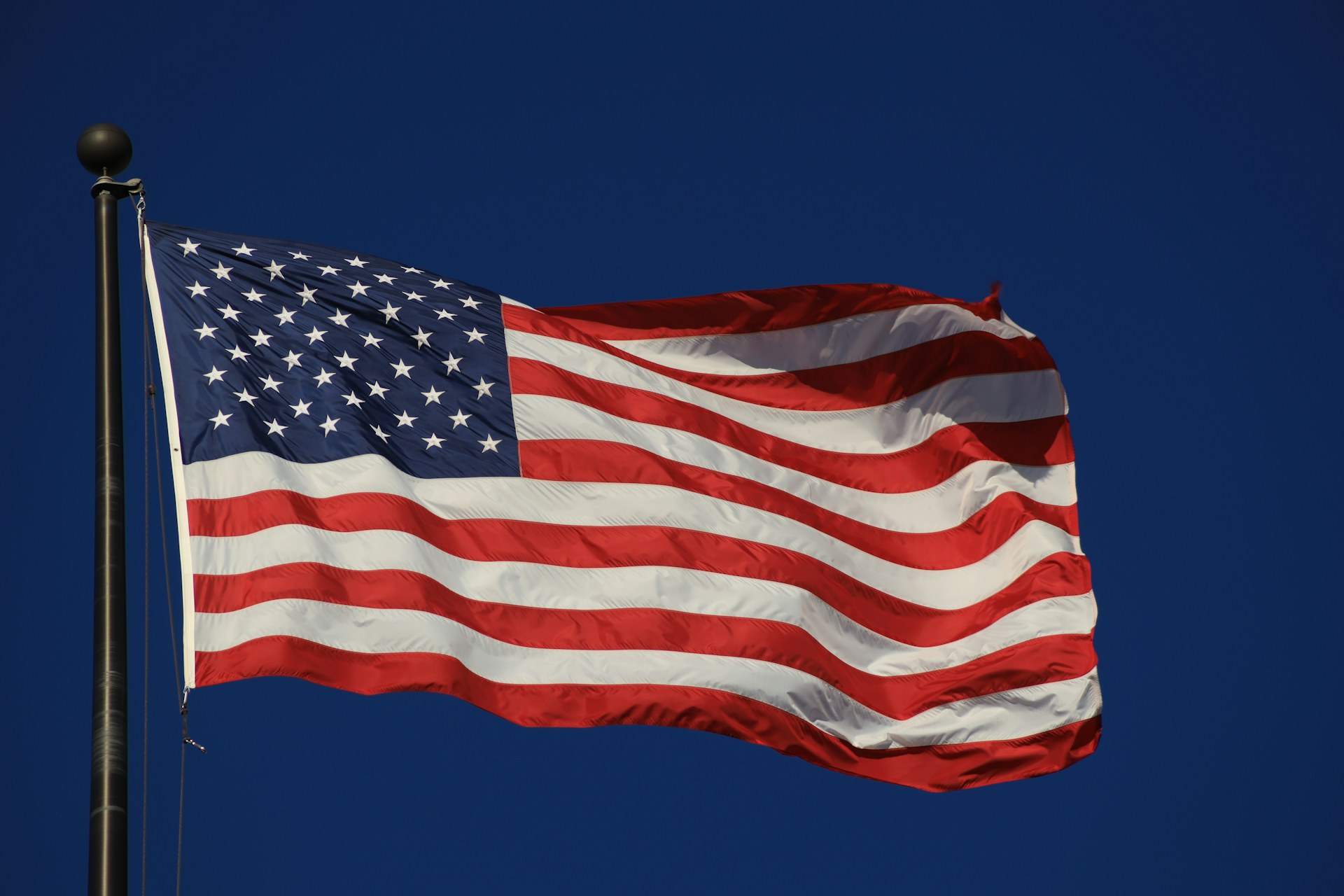
At 11 o’clock on the morning of November 11, 1918, the guns of the First World War went quiet. That silence is where Veterans Day comes from. It is a day for everyone who served: the ones we buried, and the ones who came home and went back to work.
A lot of them went back to work in our trade. They framed houses, poured slabs, ran crews and climbed ladders. Some of them learned to build in uniform. Some of them were already builders when the country asked, and they took their tools with them.
So this Veterans Day we want to tell five stories about builders who served. Every one of them is true and comes from the public record, and the sources are listed at the end. None of these men are still with us. All of them built something worth remembering.
★ ★ ★
1. The boy who sold newspapers and built a city
John Long was born in Phoenix in 1920 to German immigrant parents who had moved to Arizona on a doctor’s orders, because his father had tuberculosis. His father died when John was 22 months old. John never really knew him. His mother remarried, and the boy took his stepfather’s last name.
The family worked farms and moved a lot: Globe, Flagstaff, back to the Valley. John went to six grade schools. He milked cows, fed chickens and worked the fields, and at eight years old he was selling the Phoenix Gazette on the street to bring in some money. He graduated from Glendale High in 1939.
In September 1941, three months before Pearl Harbor, he was drafted. He ended up in the Army Air Forces as an aircraft mechanic with the 456th Bomb Group in Stornara, Italy, keeping B-24 Liberator bombers flying. His group was honored in 1944.
He came home to Phoenix, married a girl named Mary Tolmachoff, whom he had met at a softball game where she played for Webster’s Dairy, and started building the two of them a house near 23rd Avenue and Glendale Avenue.
They never moved in. Before they could, people kept knocking on the door asking to buy it. Thousands of men were coming home from the war and there was nowhere for them to live. John and Mary sold that first house for $8,450, about double what it cost them, and used the money to build another one. Then they sold that one too. And the next one.
They built twelve houses before they finally kept one for themselves.
In 1949 he built 32 more homes and sold them for under $7,000 each. In the 1950s he started something much bigger on the empty farmland west of Phoenix and named it after his wife. “It’s my wife’s name, Mary,” he said years later. “And vale is a green valley.” That is Maryvale.
His buyers were mostly veterans like him. When he realized the VA home loans those men were using would not cover a refrigerator or a stove, he went to Congress to fight for them, and his company was one of the first to put appliances into the homes it sold. By 1956 he was selling more than a hundred homes a week.
He never stopped building, and he never stopped looking up. By his own account he was the first homebuilder in the country to put solar panels on the roofs of homes he built, and his company was chosen by the U.S. Department of Energy to build Solar One, a community of 24 solar-powered homes. In the 1980s, when the streets in West Phoenix were falling apart, he donated the labor and materials to fill potholes on more than 500 miles of them.
Mary died in 1998. John died on February 29, 2008, at 87. Tens of thousands of Arizona families, a great many of them veterans, got their first front door because a bomber mechanic from Glendale High came home and could not stop building.
★ ★ ★
2. The old men who built the war
A few weeks after Pearl Harbor, the Navy had a problem. It needed airfields, docks, roads and bases on islands across the Pacific, and it needed them fast, often while people were still shooting. Young recruits could be taught to fight. They could not be taught in a few weeks to be master carpenters, steelworkers, electricians and equipment operators.
So the Navy went looking for men who already were. The new Construction Battalions, C.B.s, which everybody soon called Seabees, were authorized on March 5, 1942, and they recruited straight out of the construction trades. To get the experience it needed, the Navy waived the age limit up to 50. Several men past 60 managed to talk their way in anyway. In the first 60 battalions, the average Seabee was 37 years old.
Think about who those men were. Foremen with grown kids. Guys who had spent twenty years on job sites. They signed up anyway, and they went.
Their first job was salvaging battleships sunk at Pearl Harbor. Then they followed the Marines onto beach after beach, building airstrips that were sometimes under fire while they built them. They went ashore on D-Day to blow open the beach obstacles. They ferried General Patton’s tanks across the Rhine, and one crew took Winston Churchill across too. Their training covered more than 60 trades, and more than a quarter of a million men served in them during the war.
The Seabee motto
We Build, We Fight.
Unofficially, just two words: Can Do.
★ ★ ★
3. Five days at Dong Xoai
Marvin Shields grew up in Port Townsend, Washington. After high school he went to work in a gold mine in Hyder, Alaska. In 1962 he enlisted in the Navy for one reason: to be a Seabee. He trained as a construction mechanic, the guy who keeps the bulldozers, trucks and generators running.
On June 4, 1965, his nine-man Seabee team arrived at a small Army Special Forces camp at Dong Xoai, in Vietnam, to help build it. Five days later, on the night of June 9, the camp was still unfinished when a Viet Cong regiment attacked it with mortars and a ground assault.
Marvin was wounded early. He kept carrying ammunition to the men on the line and kept firing back, for hours. He was wounded a second time. He helped carry a man who was hurt worse than he was to safety.
Then an enemy machine gun started tearing the defenders apart. An Army lieutenant, Charles Williams, needed someone to go out with him and destroy it with a rocket launcher. Marvin volunteered. The lieutenant fired, Marvin loaded, and they knocked the gun out. On the way back, Marvin was shot again. He died while he was being flown out, on June 10, 1965. He was 25.
Marvin Shields is still the only Seabee ever to receive the Medal of Honor.
On September 13, 1966, at the White House, President Johnson presented the Medal of Honor to Marvin’s wife, with his mother, father, brother and his little daughter standing with her. Every year, Seabees promoted to chief reenact the fight at Dong Xoai in his memory.
★ ★ ★
4. The steelworker on Flight 847
Robert Stethem came from a Navy family. His father served 20 years and retired a senior chief. His mother served too. One brother became a Navy SEAL. Another became a Navy diver.
Robert joined the Navy in 1981 and became a Seabee steelworker. He built on Diego Garcia and Guam, then trained as a diver and joined an Underwater Construction Team, the Seabees who build and repair things below the waterline.
On June 14, 1985, he was heading home from a job in Greece aboard TWA Flight 847 when terrorists hijacked the plane. They went looking for Americans in the military, and they found Robert. Because he was a U.S. sailor, they beat him and tortured him. Then they shot him and threw his body out of the plane onto the tarmac at the Beirut airport. He was 23 years old.
He is buried at Arlington. The Navy named a destroyer for him, the USS Stethem. In 2010, aboard that ship, the Navy made Robert an honorary Master Chief Constructionman, the highest enlisted rank a Seabee can hold. His brother Kenneth, the SEAL, accepted it for the family. His brother Patrick spent ten years as a diver on the same underwater construction team Robert had served on.
★ ★ ★
5. Two ways to come home
Paul Ray Smith was an Army combat engineer from El Paso, a sergeant first class with the 11th Engineer Battalion. Before he deployed to Iraq in 2003, he wrote a letter to his parents.
“There are two ways to come home, stepping off the plane and being carried off the plane.”
Sgt. 1st Class Paul Ray Smith, in a letter home
It did not matter which, he wrote, because he was prepared to give everything to make sure his men made it home.
On April 4, 2003, near the Baghdad airport, Paul and his engineers were doing what engineers do: building. They had used an armored earthmover to knock a hole in the wall of a courtyard so they could set up a holding area for prisoners. That is when a much larger enemy force hit them.
Paul organized a defense of more than 100 soldiers. There was an aid station full of wounded men behind that courtyard, and he decided to hold rather than pull back. He got three wounded men out of a burning personnel carrier. Then he climbed onto it, took over its .50-caliber machine gun in the open, and kept firing through three boxes of ammunition until he was shot. He was 33.
He came home the second way. His men came home the first.
Two years later to the day, on April 4, 2005, his 11-year-old son David walked into the White House and accepted his father’s Medal of Honor.
★ ★ ★
The ones on the job site next to you
Most veterans in the trades will never have a medal or a destroyer named after them. They came home, picked up their tools and went back to work. Some of them are on roofs in the Valley today. You have probably shaken hands with a few without knowing it, because builders who served usually do not bring it up.
Here is what you can do today:
- Ask, then listen. “Where did you serve?” goes further than “Thank you for your service,” because it says you want to know the person, not just the uniform.
- Remember the families. Behind Marvin Shields was a little girl. Behind Paul Ray Smith was an 11-year-old boy. If you know a family who lost someone in service, say that person’s name out loud.
- Check on the quiet ones. If a veteran you love is struggling, the Veterans Crisis Line is free, confidential and open around the clock: dial 988, then press 1, text 838255, or chat at veteranscrisisline.net. You can call on their behalf, too.
To every veteran who ever swung a hammer, ran a crew or came home and built something: thank you. From all of us at Apex Roofing Systems, we will not forget.
Sources: John F. Long; Jon Talton, “John F. Long, a builder of modern Phoenix, dies at 87”; Seabees in World War II; U.S. Navy, “Here’s to 80 years of Can Do spirit”; Marvin G. Shields, including his Medal of Honor citation; Army Times, “The only Navy Seabee awarded the nation’s highest award for valor”; Robert Stethem; Paul Ray Smith, including his Medal of Honor citation; Veterans Crisis Line.